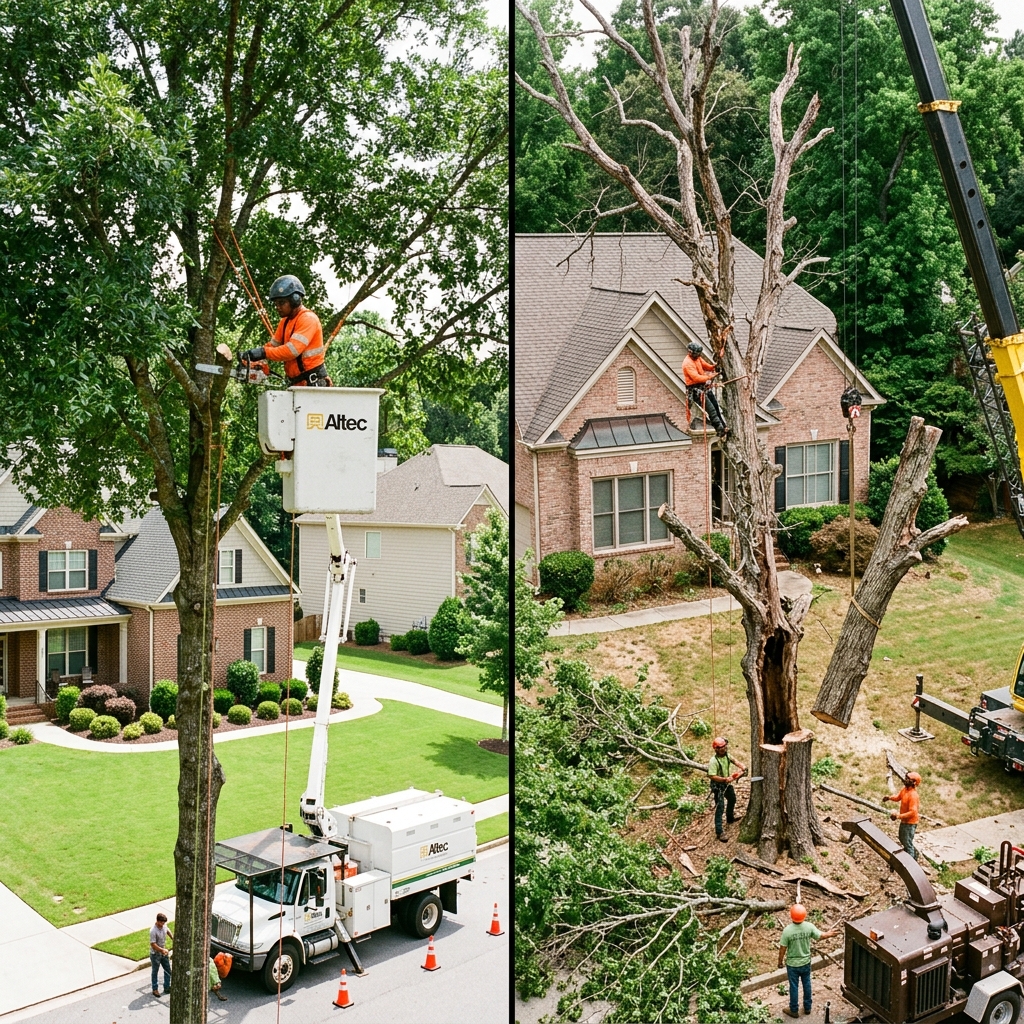
The question we hear most from Lilburn homeowners: "Should I trim this tree or just take it down" The answer comes down to the tree's health, structural integrity, and relationship with surrounding structures. A healthy tree with overgrown branches needs trimming. A diseased tree leaning toward your bedroom window needs removal.
Trimming preserves a tree's value and health while managing its shape and size. Removal is the right call when the tree is dead, structurally compromised, or poses an unmanageable risk. In most cases, professional tree trimming solves the problem without losing the tree entirely.
When Trimming Is the Right Choice
Trimming works when the tree is fundamentally healthy but needs management. Here are the situations where trimming solves the problem:
- Overgrown branches touching your roof: Crown reduction and directional pruning redirect growth away from structures.
- Dead or crossing branches: Removing deadwood and rubbing limbs improves both safety and tree health.
- Blocked views or light: Crown thinning opens the canopy without dramatically changing the tree's shape.
- Storm preparation: Canopy thinning reduces wind resistance. This is the most effective storm prevention strategy for mature trees.
- Clearance over driveways, sidewalks, or power lines: Lifting the crown creates clearance without removing the tree.
Professional pruning preserves the tree's structural integrity while addressing specific concerns. The tree continues to provide shade, increase property value, and improve curb appeal for decades to come.
When Removal Makes More Sense
Some situations can't be solved with a chainsaw trim. The tree needs to go when:
- More than 50% of the crown is dead: A tree with extensive dieback is declining and won't recover.
- Trunk has major structural damage: Large cavities, deep cracks, or significant decay in the main trunk compromise the tree's ability to stand.
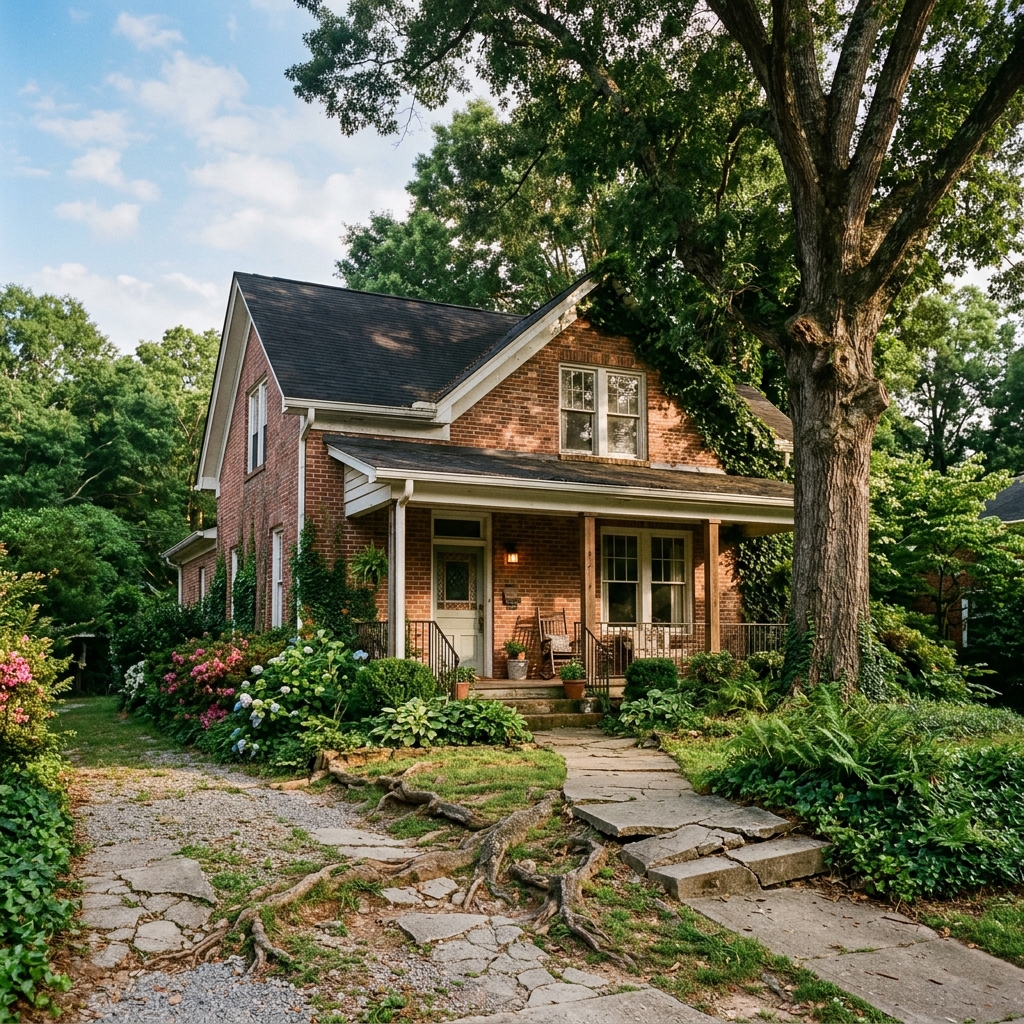
- Root system is failing: Soil heaving on one side, exposed roots, or mushroom growth at the base indicate root compromise.
- Severe lean toward structures: A tree that has developed a new lean � not one it's grown with � suggests root failure.
- Species issues: Some trees are just wrong for their location. A Bradford pear 8 feet from your house will always be a problem no matter how much you trim it.
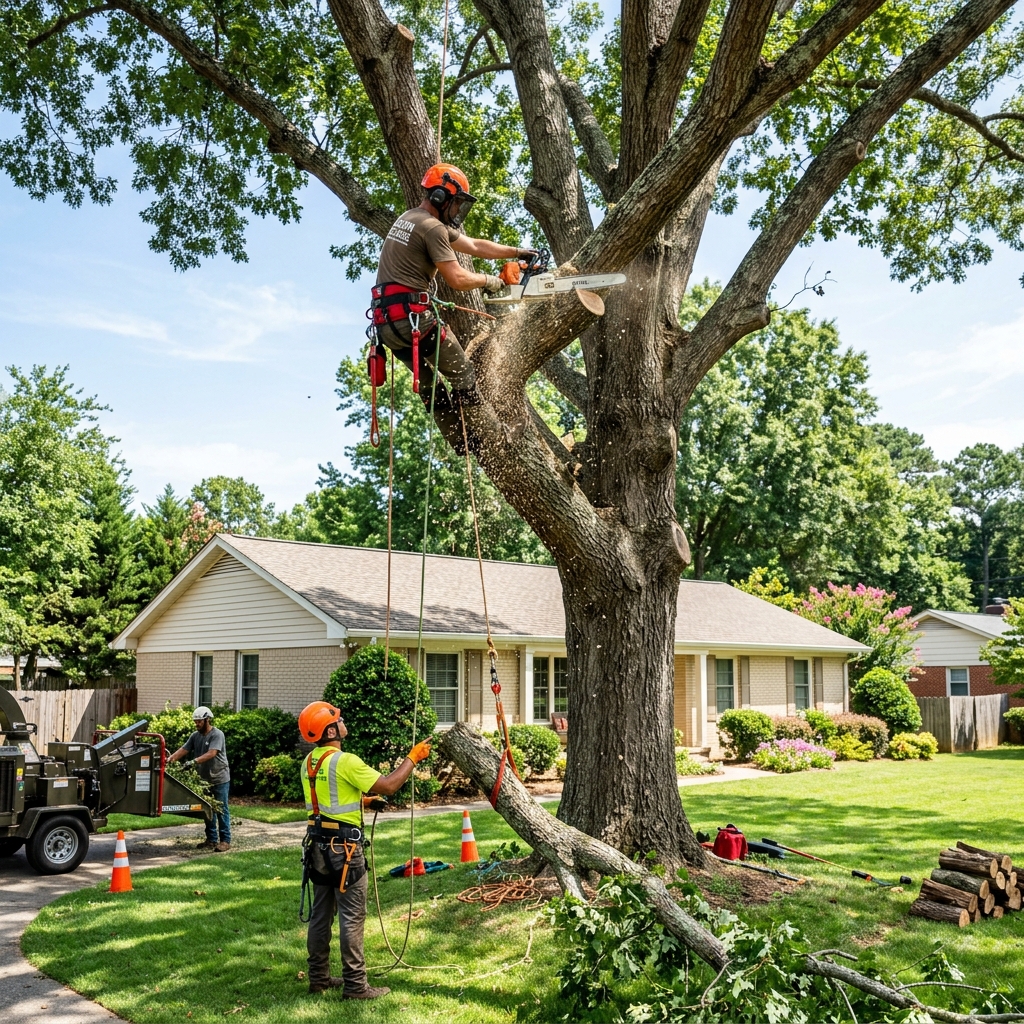
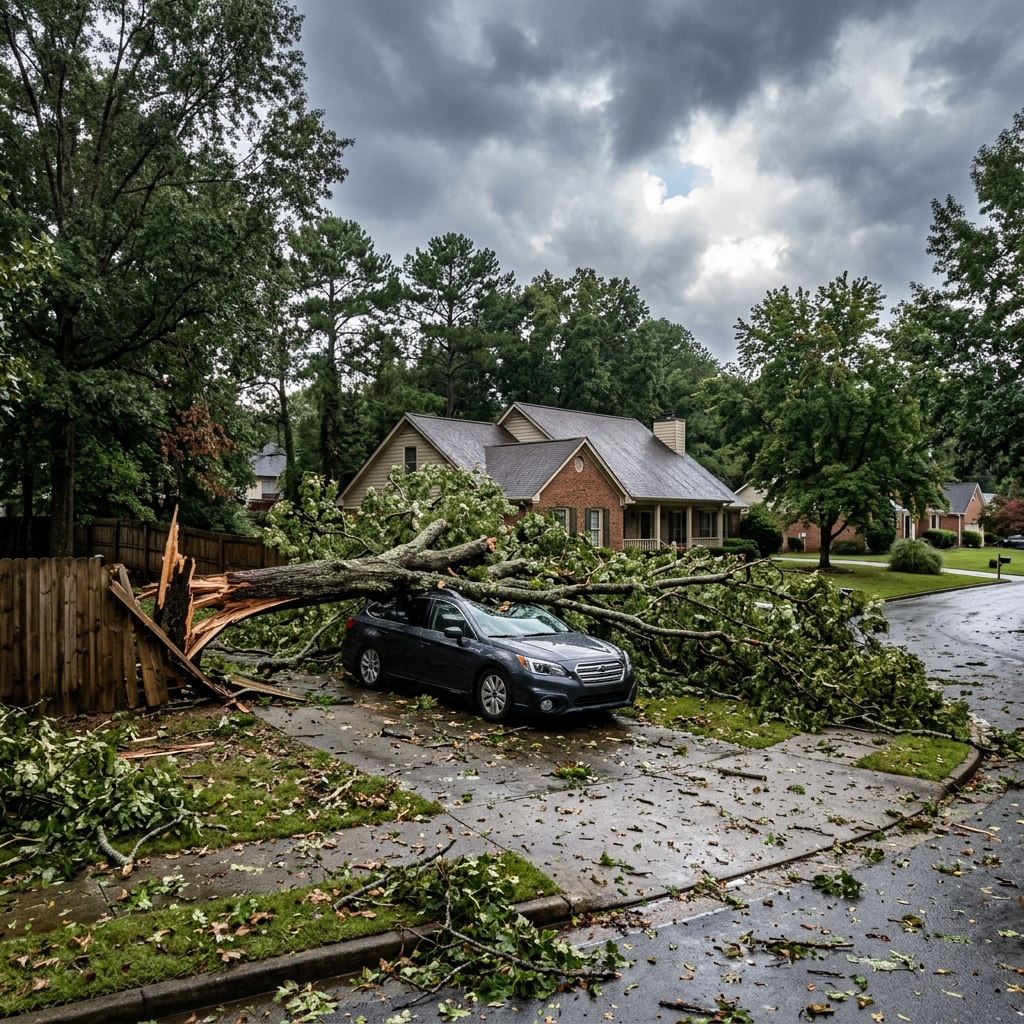
When removal is necessary, a professional tree removal service ensures the tree comes down safely without damaging your home, vehicle, or landscape. For dead or hazardous trees near structures, hazardous tree removal specialists use rigging and sectional techniques for maximum control.
Cost Comparison: Trimming vs. Removal
Here's what Lilburn homeowners typically pay:
- Tree trimming: $250-$900 depending on tree size and number of cuts needed
- Tree removal: $400 � $3,500+ depending on size, location, and complexity
- Stump grinding (after removal): Additional 50 � $400
On the surface, trimming seems cheaper � and it is per visit. But a tree that needs aggressive trimming every 2�3 years might cost more over a decade than removing it once and replanting a better species for the location.
Ask your tree service professional to calculate the 10-year cost of managing a problem tree through repeated trimming versus a one-time removal and replanting. For trees that need constant work in tight spaces near homes in Tucker, Norcross, and Lilburn, removal is often the better long-term investment.
Common Decision Mistakes
Mistake #1: Topping instead of proper trimming. Cutting the top off a tree ("topping") is the worst thing you can do. It triggers weak, rapid regrowth that's more dangerous than the original problem. If someone suggests topping, hire a different company.
Mistake #2: Removing a saveable tree. Some homeowners panic after a storm and remove trees that only need corrective pruning. Get a professional assessment before making a permanent decision.
Mistake #3: Ignoring a dangerous tree. On the flip side, some homeowners keep trimming a tree that should have been removed years ago. If your arborist says it's time, listen.
Getting a Professional Assessment
The best approach is having a professional tree inspection before deciding. An experienced arborist evaluates the tree's health, structural integrity, root zone, and relationship with nearby structures. They'll give you an honest recommendation � trim, remove, or sometimes just monitor.
Reputable tree service companies in Lilburn provide free assessments. Get at least two opinions if the recommendation is removal of a large, healthy-looking tree.