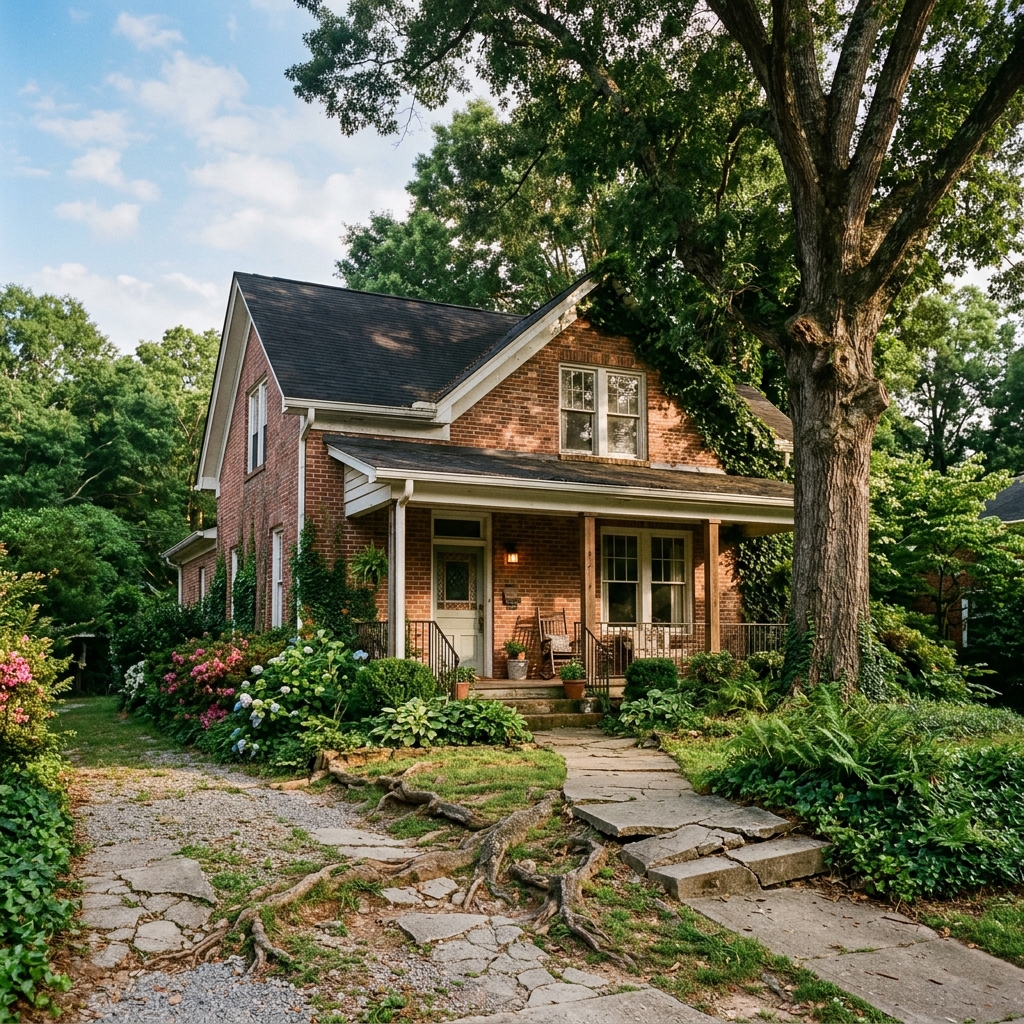
If your Lilburn home was built in the 1970s or 1980s, the saplings that were planted when the house was new are now towering 60-foot trees with root systems that extend far beyond what anyone planned for. This creates a unique set of problems � and a difficult balancing act between preserving mature trees and protecting your home.
Mature trees add 10�15% to property values in Lilburn neighborhoods, but neglected ones can cause thousands in damage to foundations, roofs, plumbing, and driveways. The key is proactive management, not removal.
When Trees and Homes Age Together
Drive through established Lilburn neighborhoods off Lawrenceville Highway or near Mountain Park, and you'll see the pattern everywhere � massive oaks and pines that dwarf the homes beneath them. These trees were 10-foot saplings when the homes were built. Nobody anticipated what they'd become in 40 years.
The canopy that provides beautiful shade in summer also means roots systems that extend 30 to 50 feet in every direction, branches that scrape shingles with every breeze, and root masses that have long outgrown the space between the house and the property line.
Homeowners in neighboring Norcross and Lawrenceville face the same issues. The subdivisions from that era all share similar lot sizes and planting patterns.
Foundation and Root Damage
Large trees planted too close to homes � a common practice 40 years ago � create serious foundation concerns. Georgia's clay soil expands when wet and contracts when dry. Large tree roots amplify this cycle by pulling moisture from the soil during dry periods, causing uneven settling.
- Cracked foundation walls: Roots don't usually crack foundations directly, but the soil movement they cause does.
- Lifted driveways and sidewalks: Surface roots from oaks and sweetgums routinely heave concrete along walkways.
- Uneven floors: If you notice sloping floors in an older Lilburn home, tree roots may be a contributing factor.
A professional tree inspection can determine whether roots are actively threatening your foundation and recommend solutions ranging from root barriers to selective removal.
Roof and Gutter Problems
Overhanging branches are the most visible issue with mature trees near older homes. They create multiple problems simultaneously:
- Leaf and debris accumulation in gutters causes water backup and potential roof damage
- Branches rubbing against shingles wear through the protective granule layer
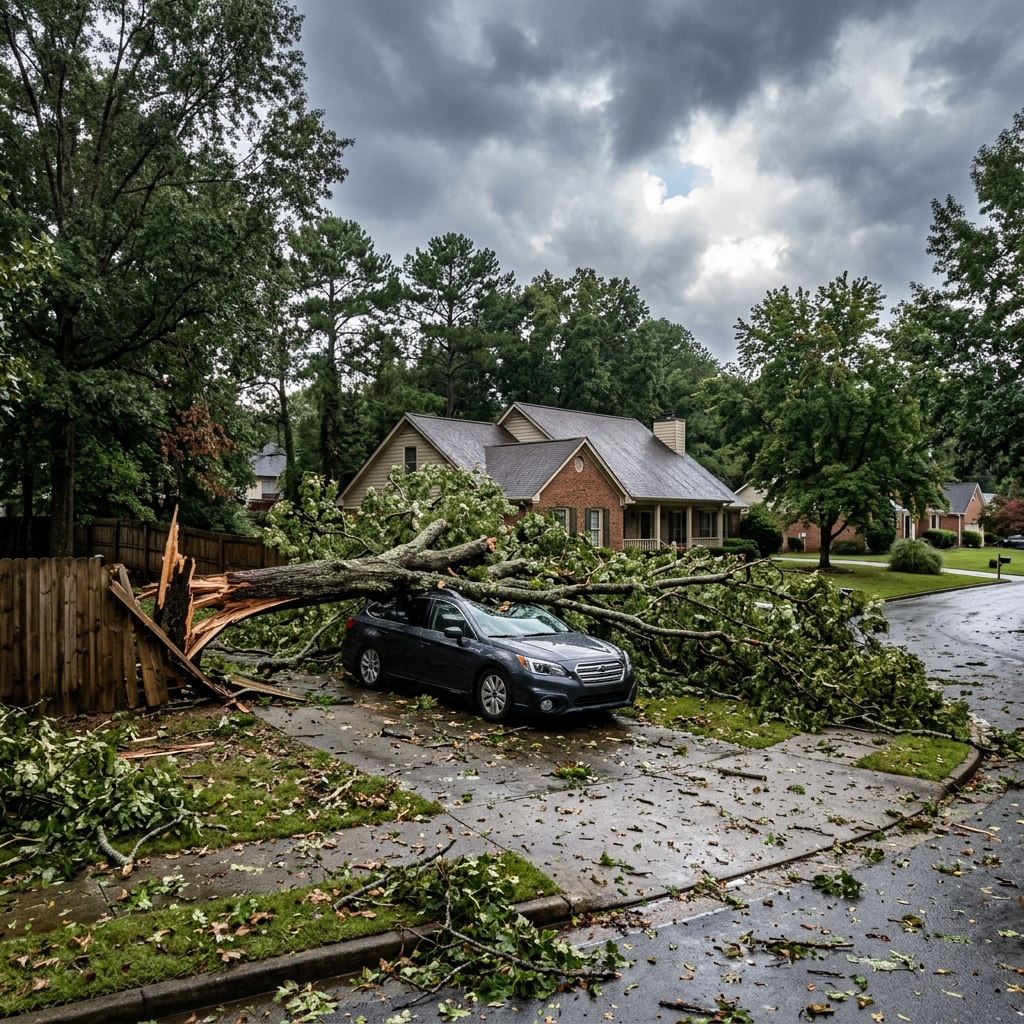
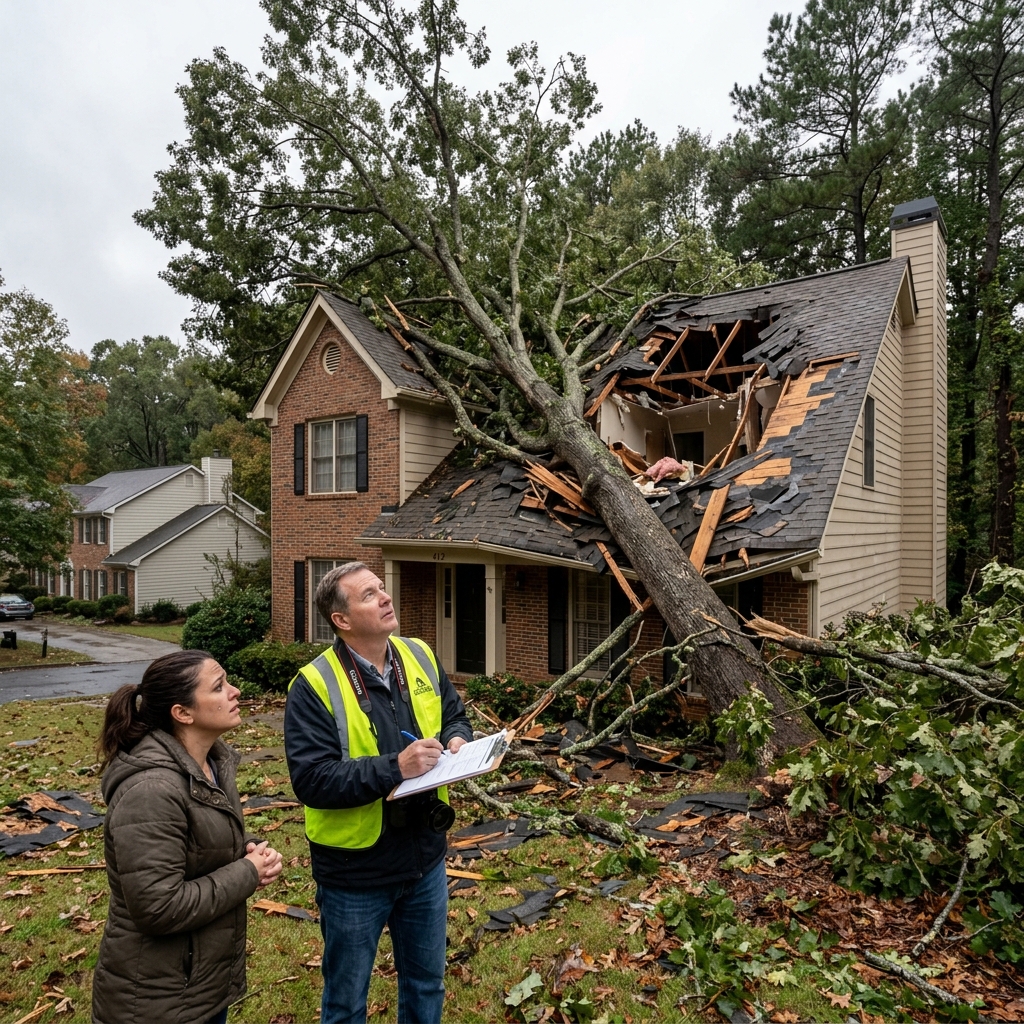
- Fallen limbs can punch through aging roof materials that might have withstood them when new
- Excessive shade promotes moss and algae growth on roofing materials
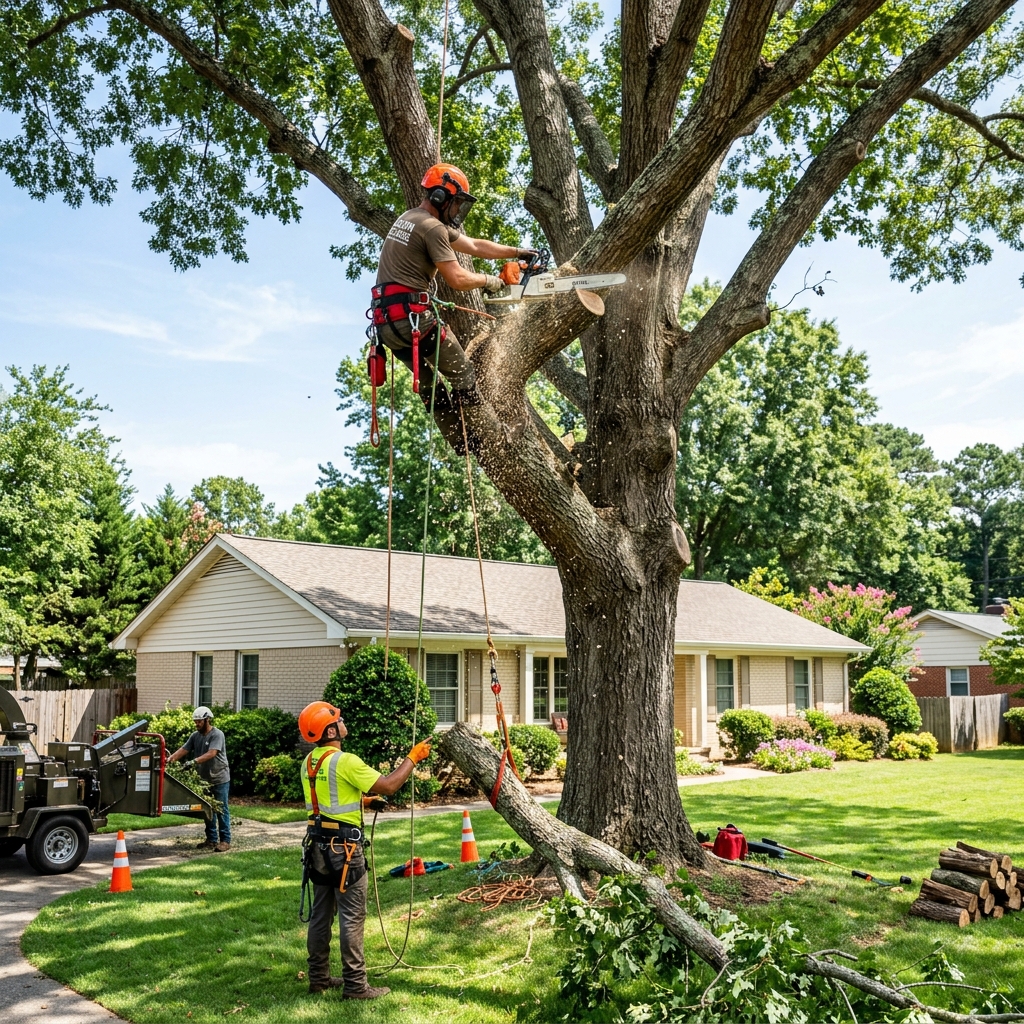
Regular tree trimming maintains a minimum 10-foot clearance between branches and your roof. This is one of the most impactful maintenance investments for older Lilburn homes.
Plumbing and Sewer Line Intrusion
Older homes in Lilburn typically have clay or Orangeburg sewer pipes that are especially vulnerable to root intrusion. Tree roots seek water sources, and even tiny cracks in aging pipes become highways for aggressive root growth. Willows, maples, and elms are the worst offenders, but any large tree within 20 feet of a sewer line poses a risk.
Signs of root intrusion include slow drains, gurgling sounds, and sewage backup. By the time you notice these symptoms, roots have usually been growing in the pipes for months or years.
Before planting new trees near older Lilburn homes, consult both an arborist and a plumber. Map your sewer lines and plant species with non-invasive root systems at appropriate distances. Installing root barriers during planting costs a fraction of pipe repair later.
When to Preserve vs. Remove Mature Trees
Not every large tree near a house needs to come down. Many can be managed through strategic pruning, root management, and monitoring. Trees that are structurally sound, healthy, and not actively damaging your home are worth preserving � they're irreplaceable assets.
Remove the tree when it shows structural failure, internal decay, significant lean toward the home, or has caused repeated and escalating property damage despite management efforts. A dead or dying tree near a structure should be removed promptly before storm season � hazardous tree removal prevents far more costly emergency situations.