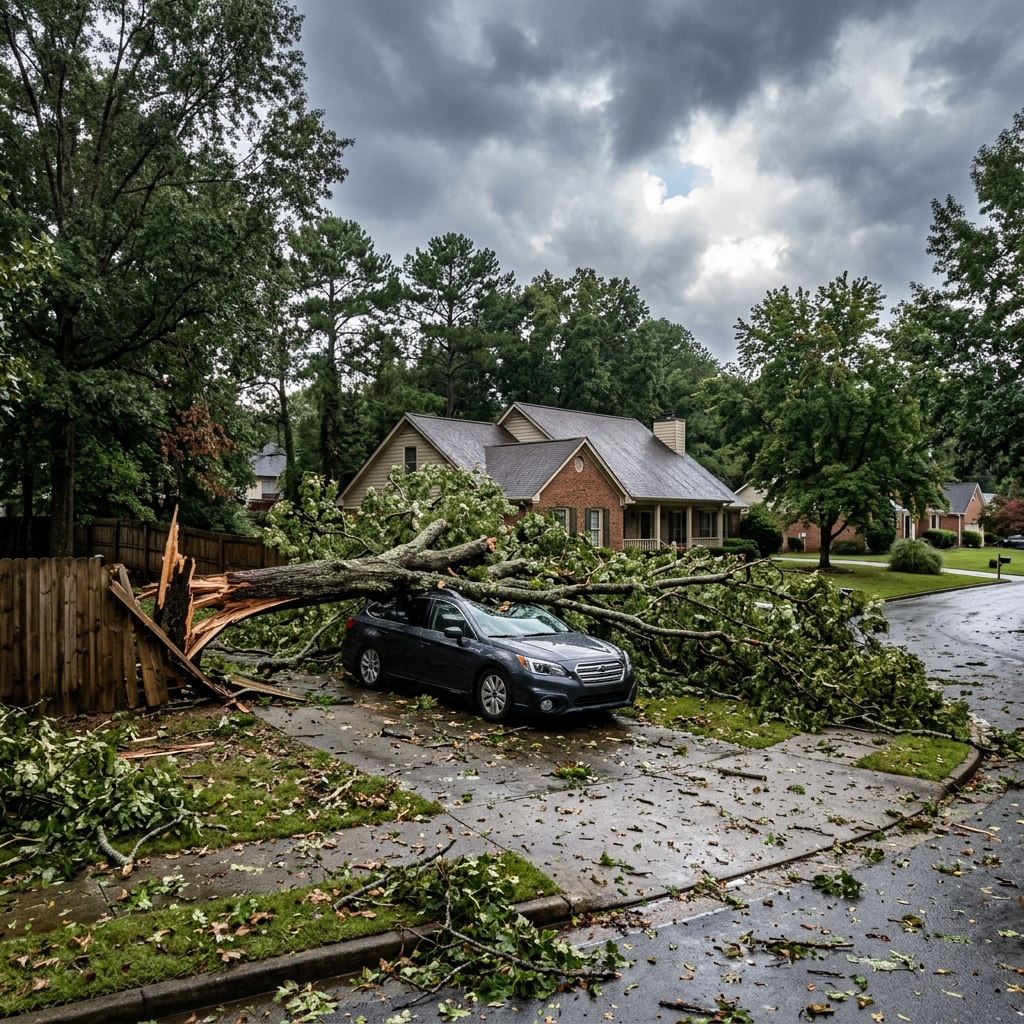
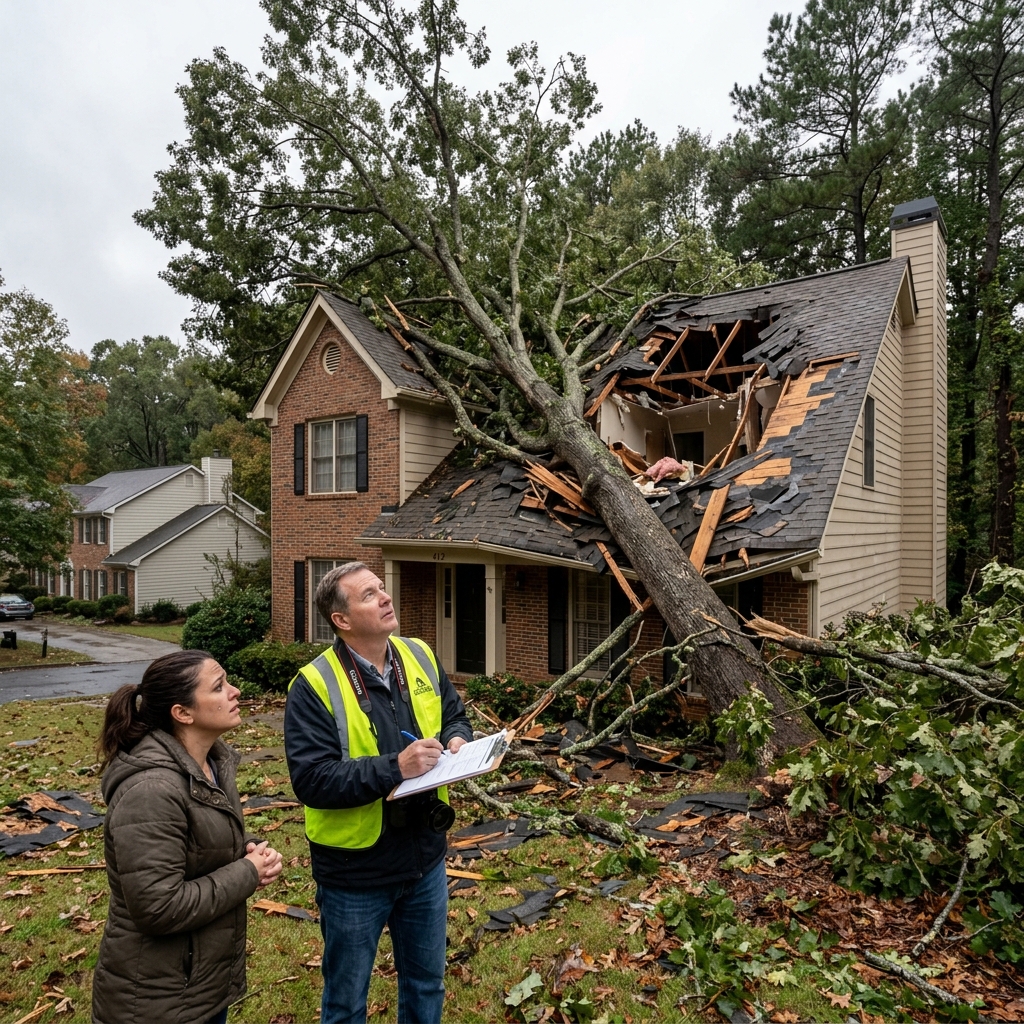
When a tree crashes through your roof during a Gwinnett County thunderstorm, the first question after "is everyone safe" is usually "will insurance cover this" The answer depends on what caused the tree to fall, what it hit, and whether you maintained your property. Most homeowner's policies cover storm-related tree damage to structures, but the details matter enormously.
Insurance typically covers tree removal when a tree damages a covered structure (home, fence, shed, detached garage). If a tree falls in your yard without hitting anything, most policies won't pay for removal � even if you need an emergency tree removal service.
What Homeowner's Insurance Typically Covers
Standard policies in Georgia generally cover tree damage when all three conditions are met: the damage was caused by a covered peril (storm, wind, lightning), the tree struck a covered structure, and you've maintained reasonable property upkeep.
- Tree on house or attached garage: Covered under dwelling coverage. This includes removal costs and structural repairs.
- Tree on fence, shed, or detached structure: Covered under "other structures" coverage, usually at 10% of your dwelling coverage limit.
- Tree on vehicle: Covered under comprehensive auto insurance, not homeowner's.
- Tree blocking driveway: Some policies include $500-$1,000 for debris removal that blocks access to your home.
Most policies cap tree removal costs between $500 and $1,000 per tree, with a total limit per event. If removal costs exceed this, you're responsible for the difference.
What Insurance Won't Cover
- Tree falls in yard, hits nothing: A 70-foot pine topples in your backyard during a storm but misses every structure Most policies won't cover the removal cost.
- Neglected dead trees: If an insurer determines the tree was visibly dead or dying and you failed to have it removed, they may deny the claim entirely.
- Gradual damage: Roots cracking your foundation over years That's maintenance, not a covered event.
- Landscaping: Replacement of shrubs, flower beds, and lawn damaged during tree removal is rarely covered.
When a Neighbor's Tree Falls on Your Property
This is one of the most common disputes we see in Lilburn neighborhoods. Here's how it actually works in Georgia:
If your neighbor's healthy tree falls due to a storm and damages your property, your insurance pays, not theirs. Georgia law treats storm-fallen trees as acts of nature, regardless of property lines.
The exception: if you can prove your neighbor knew the tree was dead or hazardous and failed to act, you may have grounds for a liability claim against their policy. This is why it's smart to send a written notice (certified mail) if a neighbor's tree looks dangerously dead or diseased. Documentation matters.
Take dated photos of any neighboring trees that look dead, leaning, or damaged. If you've notified a neighbor about a hazardous tree in writing and they ignore it, that documentation can be critical if the tree later damages your property. We see this regularly in Lilburn subdivisions off Rockbridge Road and near Snellville.
How to Document a Tree Damage Claim
Before any cleanup begins, document everything:
- Wide-angle photos showing the full tree and what it struck
- Close-up photos of all damage to structures, vehicles, fences, and landscaping
- Photos of the tree's root ball or break point to show the cause of failure
- Video walkthrough narrating the damage while filming
- Written notes with date, time, and weather conditions at the time of failure
Contact your insurance company before hiring a storm damage tree cleanup service. Some insurers require pre-approval for removal costs. However, if the situation is an immediate safety hazard (tree on power lines, blocking exit, or risk of further collapse), document quickly and proceed with emergency removal.
How to Avoid Denied Claims
Maintain your trees. The single most common reason for denied tree damage claims in Gwinnett County is insurer determination that the homeowner neglected obvious hazards. Regular tree inspections create a documented record that you maintained reasonable care.
Keep records of all tree maintenance � trimming receipts, inspection reports, and removal of dead branches. This paper trail proves you acted responsibly and makes claim denial much harder for insurers to justify.