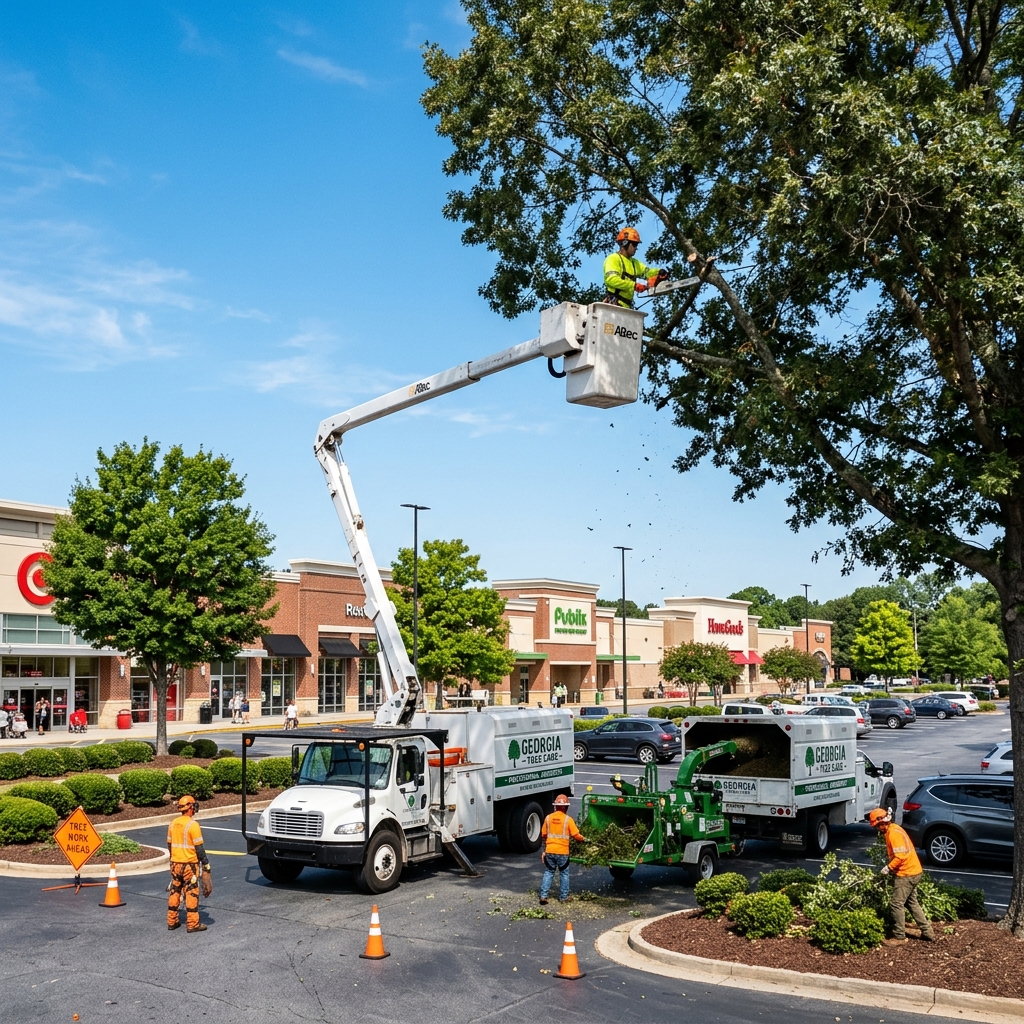
If you own or manage commercial property in Lilburn, the trees on your lot are more than decoration. They're potential slip-and-fall liabilities, ADA compliance concerns, parking lot hazards, and � when properly maintained � significant assets that boost property value and tenant satisfaction. Commercial tree management requires a different approach than residential work.
Commercial property owners face higher liability exposure than homeowners when trees cause damage or injury. A documented tree maintenance program isn't just good practice � it's legal protection. Proactive care costs a fraction of what a single tree-related injury claim can run.
The Liability Risk You Can't Ignore
When a dead branch falls in a parking lot and hits a customer, the property owner is liable if they failed to maintain the trees. Georgia courts look at whether the property owner knew (or should have known) about the hazard and whether they took reasonable steps to address it.
"We didn't know the branch was dead" doesn't hold up in court when reasonable inspection would have caught it. Commercial property owners along Lawrenceville Highway, Indian Trail-Lilburn Road, and throughout Gwinnett County's business corridors carry this responsibility.
The solution is documentation. Regular tree inspections by a qualified arborist create a paper trail proving you exercised reasonable care. This documentation is your strongest defense if an incident occurs.
Building a Maintenance Schedule
- Quarterly visual inspections: Walk the property looking for dead limbs, new leans, and signs of decline. Document findings.
- Annual professional assessment: Hire a certified arborist to evaluate all significant trees. Get a written report with recommendations.
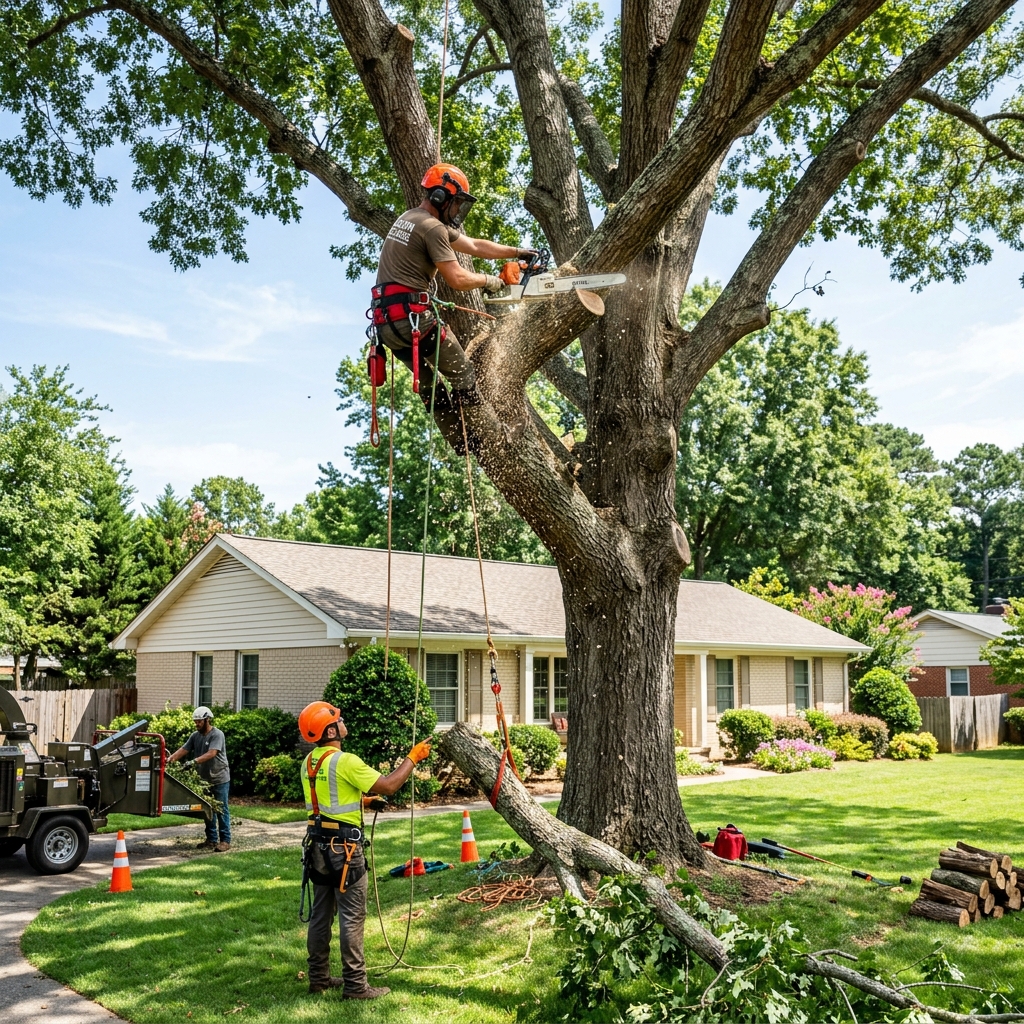
- Bi-annual pruning: Schedule professional pruning every 2�3 years for canopy trees. High-traffic areas may need annual attention.
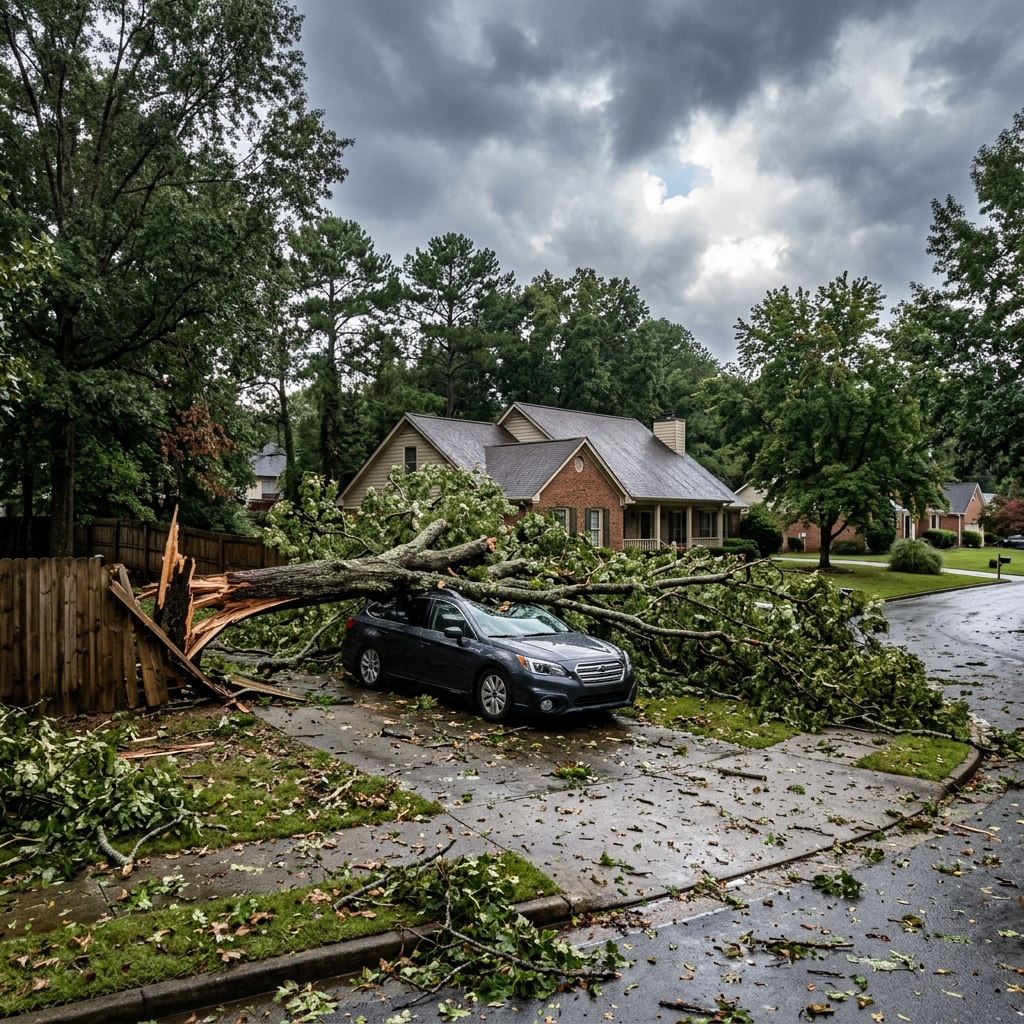
- Post-storm inspections: After any significant weather event, inspect all trees before reopening areas to traffic and foot traffic.
Create a tree inventory for your commercial property. Map every significant tree, record its species, size, condition, and maintenance history. This inventory becomes invaluable for insurance purposes, property management transitions, and long-term maintenance planning. Properties along Lilburn's commercial corridors especially benefit from formal tree inventories.
Parking Lot Tree Management
Parking lot trees face harsh conditions � compacted soil, reflected heat from asphalt, limited root space, and physical damage from vehicles. These stresses make them more prone to decline and failure than trees in natural settings.
Common parking lot tree issues include:
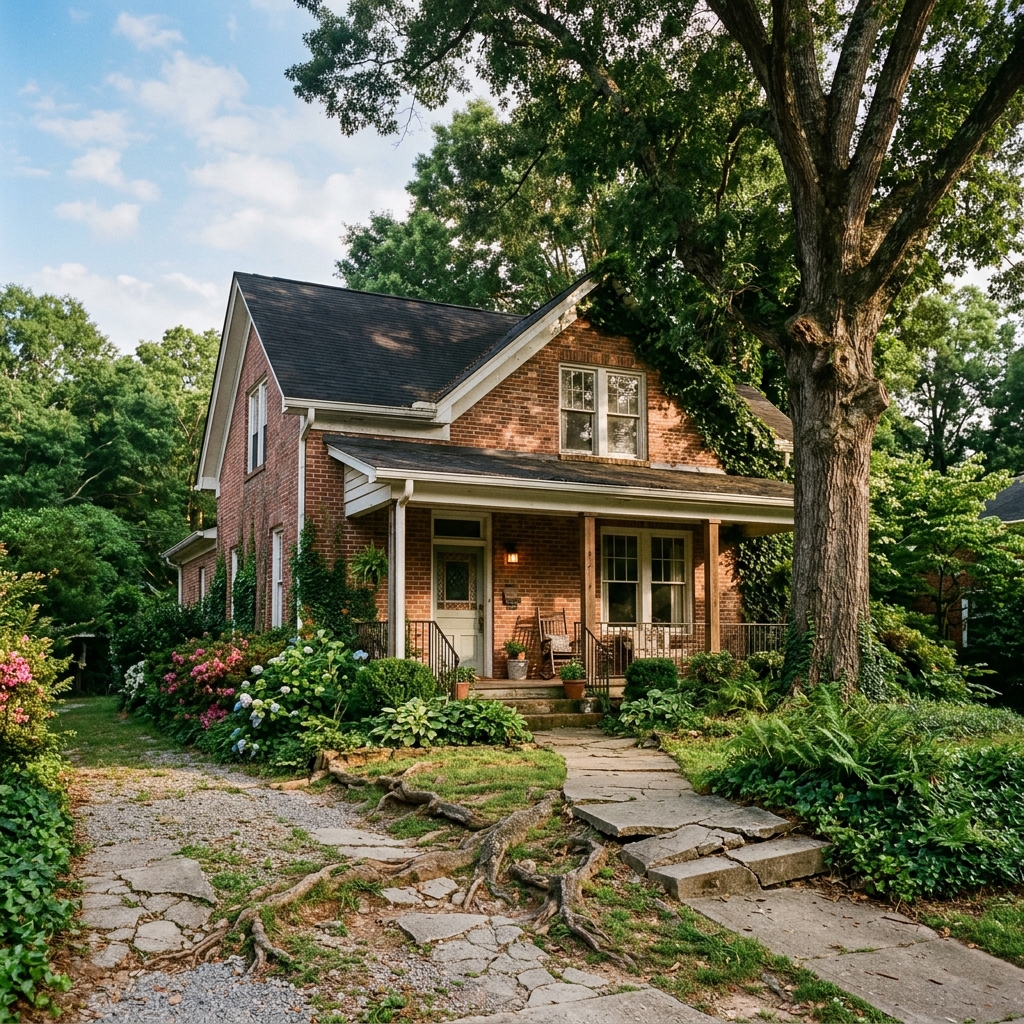
- Root heaving that cracks curbing and creates trip hazards
- Low-hanging branches that scrape vehicles and block visibility
- Dead limbs falling on parked cars (liability nightmare)
- Root systems invading stormwater drains
Maintain minimum clearance heights: 8 feet over walkways and 14 feet over vehicle travel lanes. Regular trimming maintains these clearances and prevents the progressive neglect that turns into expensive problems.
ADA and Code Compliance
Tree-related ADA violations are surprisingly common on commercial properties. Roots lifting sidewalks create trip hazards that violate accessibility requirements. Overhanging branches below 80 inches on walkways are protruding object hazards under ADA guidelines.
Gwinnett County code enforcement also monitors tree maintenance on commercial properties, particularly regarding clearance over public sidewalks and visibility at intersections. Non-compliance can result in citations and mandatory corrective work.
The ROI of Professional Tree Care
Well-maintained trees increase commercial property values by 7�15%. Shopping centers with mature, healthy trees see higher tenant retention and foot traffic. Office parks with attractive landscaping command higher lease rates.
Compare that to the costs of neglect: a single tree-related injury claim can exceed $50,000. Emergency removal after a preventable failure costs 3�5x what proactive maintenance would have. The math is clear � invest in regular professional care.